
Frankenstein lives next door. I’m Frankenstein’s monster.
Frankenstein lives next door. I’m Frankenstein’s monster.
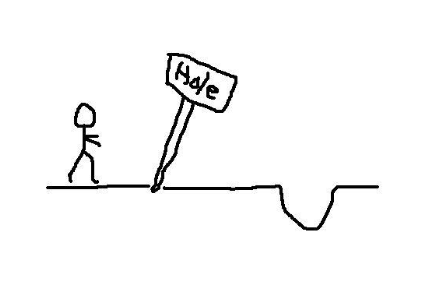
Based on your past knowledge and the image, what does foreshadowing mean?
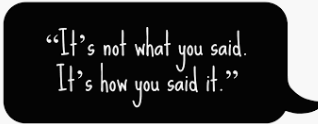
Based on your past knowledge and the image, what does tone mean?
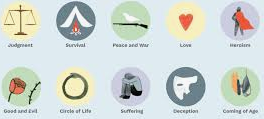
Based on your past knowledge and the image, what does symbol mean?
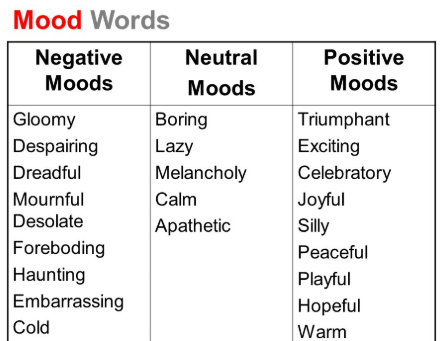
Based on your past knowledge and the image, what does mood mean?
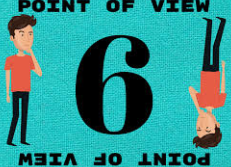
Based on your past knowledge and the image, what does point of view mean?

Based on your past knowledge and the image, what does imagery mean?
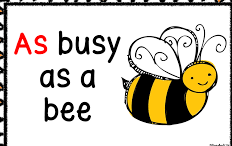
Based on your past knowledge and the image, what does simile mean?
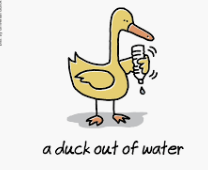
Based on your past knowledge and the image, what does metaphor mean?
Answers:
Foreshadow- a warning or indication of a future event
Tone- the attitude or character of a piece of writing
Symbols-the use of symbols to represent ideas or qualities.
Mood-an emotional setting that surrounds the readers.
Point of View- the angle of considering things
Imagery-visually descriptive or figurative language
Simile – a comparison of two unlike things using like or as
Metaphor – a direct comparison of two unlike things
Hi! My name is Victor Frankenstein. I’m looking for a nice down to earth lady who is interested in building a relationship with me. I am a recent graduate at the University of Ingolstadt. In my free time I enjoy sitting outdoors and going on adventures
Needed: University Professor. Qualifications: Bachelor’s degree in any subject. If you are interested or have any questions please feel free to stop by the University of Ingolstadt at any time.
For sale: 2 year old mule. Well trained and ready to work for whatever job. Will go to highest bidder.
Looking for a nice 2 cottage to rent for this summer. I am planning on vacationing here and want a decent place to stay. Must be cheap.
New restaurant location. Naple’s Stuffed Crepes has recently moved buildings. Still same great taste, just different location. Stop by and see for yourself!
The race is on. Frankenstein, hiding in fear of the monster, lets him run rampant. Point to the monster. With no knowledge of the outside world, the monster has to learn how to fend for himself. Meanwhile, Frankenstein is still attending university, safe from the monster. Point to Frankenstein. After many months of training, the monster teaches himself the language of the humans, and starts on a journey to find his creator. Point to the monster. With no knowledge of where to go, the monster eventually finds his creator’s home town. Point to the monster. Looking for a friend, the monster finds William, and accidentally kills him. After 6 long years, Frankenstein finally returns home. Point to Frankenstein. After figuring out the death and the probable cause of his little brother’s murder, Frankenstein falls into a dark sadness. In search of the monster, Frankenstein takes a journey up the nearest mountain range. The monster comes to him. Point for Frankenstein. Instead of fighting out and acting harshly, they decide to talk. One point to each of them. After telling his side of the story, the monster asks Frankenstein to build a monster companion for him. Frankenstein agrees. Point to the monster. While building the other creation, Frankenstein realizes building another monster isn’t a good idea so he destroys his work. Point to Frankenstein. Enraged, the monster hunts down Henry Clerval and kills him. Point to the monster. With just one more round until the end, the score is close, who will win? Frankenstein is wrongfully accused of his best friend’s murder. The final point goes to the monster!
Final score:
The monster: 6
Frankenstein: 5
A close game, but the victor is the monster!
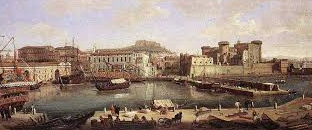
Naples, Italy
Many activities are found in Naples, including enjoying nice walks on the beach and the lovely weather in spring and summer time. Naples is located near the coast of the Tyrrhenian Sea. In fact, Naples is just 262 kilometers (162.8 miles) from the coast! While the average Naples weather forecast includes rain, it is always a comfortable temperature, rarely going below 10 degrees celcius (50 degrees fahrenheit) Come visit Naples and enjoy the rich history of the ancient city!

Letter 1:
Dear Editor,
Recently, I recently read your article about Frankenstein being considered a college bound book. While you stated some valid reasons, I disagree with your overall opinion. Frankenstein should not be considered a college bound book and here’s why: First off, the information in the story is outdated. This book takes place in the 1700’s and everything is so different now. Because everything has modernized, college students won’t be able to relate to or understand the story that well. If Frankenstein were to be considered college bound, the story would have to be rewritten and altered to be able to be understood modern young adults. Also, Frankenstein is a science fiction novel, so students won’t learn as much as they would with a historical or realistic fiction story.
Sincerely,
Raine Shannah
Letter 2:
Dear Editor,
I have some concerns I would like to discuss with you. First off, I need you to find someone willing to create a female monster I could build a relationship with. I never realized how lonely life is without any human until I lived beside the de Lacey family. If you find someone to construct a monster, I could finally know what true joy is. Secondly, I don’t like having to live in solitude or live in constant fear of who is going to see me. If you could please find either a nice barren village for me to take residence in or come up with another solution that would be great. Thank you for reading this and considering my requests.
Sincerely,
The monster
Frankenstein should be considered a college bound book. It causes people to really sit back and think about what the story is telling you. While there is an obvious gothic element to the book, Frankenstein offers some real life advice. Gita Manaktala, MIT Press’ editorial director, states “It’s a book that’s relentlessly questioning about where the limits are and how far to push, and what the implications are of what we do in the world.” In this, Gita was explaining how Frankenstein questions the limits of everything we do and just how much is possible.
Also, Frankenstein can be understand many different ways. It all just depends on the perspective of the reader. This is another reason Frankenstein should be considered a college bound book. The comprehension of the book is open to many different understandings. Angela Wright, a lecturer in Romantic literature at the University of Sheffield, explains her understanding of the book, saying “She (Mary Shelley) thought these people had crossed a line, but she had a lot of admiration for scientific thought in general.” Wright thinks Mary Shelley admires science and created Frankenstein as a result of her passion, but also to showcase how things can become extreme very quickly.
To sum up, Frankenstein is a college bound book. Not only because of the extreme thought put into it, but also what the readers take from the story. Each reader finds their own perspective and opinion on the book and takes something different from it. The book also causes the reader to really dig deep and analyze the true meaning of the story.
Sources Cited:
Eschner, Kat. “What Frankenstein Can Still Teach Us 200 Years Later.” Smithsonian.com, Smithsonian Institution, 14 Mar. 2018, http://www.smithsonianmag.com/arts-culture/reading-original-frankenstein-200-years-180968473/.
Geoghegan, Tom. “Frankenstein: 10 Possible Meanings.” BBC News, BBC, 14 Mar. 2011, http://www.bbc.com/news/magazine-12711091.
Don’t rely on others to provide your happiness; you have to find it yourself.
This theme can be found in many scenarios throughout the book. For example, Elizabeth Lavenza didn’t have a great life growing up, but she found her own happiness through her adopted family. Both of her parents died so she was left to be raised in a foster home. After being adopted by the Frankenstein’s, she started to have a great life. She never let her bad past destroy her happiness she has now. The book talks about her history saying “…the daughter of a Milanese nobleman. Her mother was a German, and had died on giving her birth.”(Shelley 30) This quote explains how Elizabeth’s past is like, but it also shows how she never let that control her happiness.
Also, this theme is shown through the monster’s story. He is telling Victor of his time spent watching the de Lacey’s and how he felt like they were his friends, saying “…but allow me now to return to the cottagers, whose story excited in me such various fellings of indignation, delight, and wonder, but which all terminated in additional love and reverence for my protectors…”(Shelley 108) The monster had never met the cottagers at this point in the story, yet he had this feeling of love and compassion for them. He viewed them as his “protectors” even though they didn’t know he existed. When the de Lacey family found out about him, they moved. The monster, enraged by the feeling of betrayal, burnt the cottage down. He built his happiness solely on the cottagers and their presence. When the cottager were no longer around, he lost his happiness and acted out.
Q:When and where were you born?
MS: I was born in London on August 30th, 1797.
Q: How did you meet your husband?
MS: I met Percy because he admired my father’s work. He often visited my home. That’s where we first met and developed a relationship.
Q: When did you two get married?
MS: Well, we actually ran off to Europe together. My stepsister accompanied us and I found out I was pregnant. My father was enraged with me and refused to associate with me for more than 2 years.
Q: When did you have the time to write Frankenstein?
MS: I took a summer holiday in Switzerland with my step sister and her significant other. We had a contest to see who could write the best ghost story and I wrote what was to be the outline of Frankenstein.
Q: Wow, that’s amazing! Thank you so much for your time.
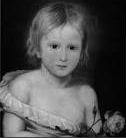
William Frankenstein, born in 1787 in Naples, Italy, died tragically at the young age of 5. William is the youngest son of Alphonse Frankenstein and Caroline Beaufort Frankenstein. He is survived by an older brother, Victor Frankenstein. During his short lived life, William enjoyed playing outside whenever he could. Memorial services for William will be held on Friday, April 16th at the Naples Funeral Home.
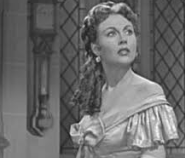
Elizabeth Lavenza, exact date of birth unknown, was raised in a foster home after her parent’s tragic deaths. During a stay in Lake Como, Alphonse and Caroline Frankenstein adopted her. She enjoyed spending time with her family. She experienced many losses in life, but was grateful for her family. Later in life, she marries her adoptive brother, Victor Frankenstein. During her wedding night she was brutally murdered. Elizabeth’s funeral services will be held at Italy’s Communion Funeral Home tomorrow, March 26th from 10:00 a.m. to 1:00 p.m.
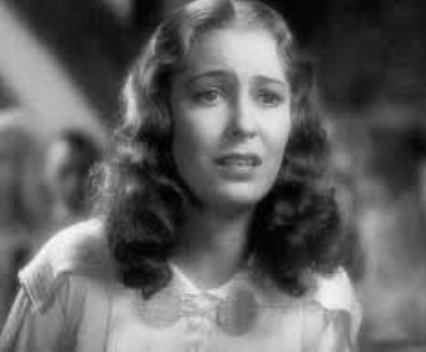
Caroline Beaufort Frankenstein was born September 4th, 1750. She had three children with Alphonse Frankenstein, whom she married in 1768. Alphonse and Caroline adopted a daughter, Elizabeth. During her free time, she spent her time tending to her family’s needs. She died due to the scarlet fever which she had contracted from Elizabeth. While, the disease minorly affected Elizabeth, it was fatal to Caroline. Services will be held at Naples Memorial Services on June 18th.
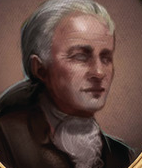
M. de Lacey was born in Geneva, Italy in 1720. he is the father of Felix and Safie de Lacey and the father-in-law of Agatha. During his final years, he was home-bound and taken care of by his two children. Due to his blindness, he needed constant care. During his free time, he loved to sing songs and play his guitar. He passed away of natural causes. His funeral services will be held August 9th at Geneva’s United Funeral Home
 Frankenstein